
Revolutionizing Measurement: The Heart of Metrology
Understanding the Science of Precision
Metrology, often referred to as the science of measurement, is a foundational element of numerous industries. A metrology company serving multiple industries plays a crucial role by establishing measurement standards, ensuring accuracy, and providing a framework of traceability that extends back to national or international standards. Precision in measurement is critical because it directly impacts product quality, safety, and overall performance. In sectors ranging from manufacturing to pharmaceuticals, such companies ensure that measurements are consistent, accurate, and reproducible, which is essential for regulatory compliance and fostering consumer trust.
The science of precision encompasses various disciplines, including dimensional metrology, temperature measurement, mass and volume, and electrical measurements, among others. Each of these categories employs specific methods to achieve accurate results. For instance, dimensional metrology utilizes advanced tools such as coordinate measuring machines (CMM) and laser scanning systems to ensure that manufactured parts meet design specifications. Understanding the intricacies of these measurement tools, including how environmental factors can alter measurements, emphasizes the critical need for continued advancements and innovations within the discipline.
The Role of Metrology in Quality Assurance
Quality assurance is an integral part of modern manufacturing and production processes, acting as a safeguard against defects and ensuring that organizations meet defined standards. Metrology plays a pivotal role in this area by providing reliable measurement data that forms the backbone of quality control programs. By employing rigorous measurement standards, organizations can minimize variations in manufacturing processes, ultimately leading to improved product consistency and quality.
How Metrology Drives Innovation Across Industries
In today’s technology-driven world, innovation is key to maintaining a competitive edge, and metrology serves as a catalyst for such innovation across various sectors. The integration of advanced measurement technologies enables organizations to develop more efficient processes, enhance product quality, and shorten time-to-market for new products. For example, in electronic manufacturing, precision measurements are crucial for producing increasingly sophisticated devices, ensuring that components fit together seamlessly and function as intended.
Furthermore, metrology is essential in fostering research and development, allowing scientists and engineers to validate theories and experiment results with accurate data. As industries push the boundaries of their capabilities by utilizing nanotechnology or developing high-performance materials, metrology equips them with reliable measurement techniques that ensure the integrity of their innovations. In this context, metrology does not merely support innovation; it becomes a cornerstone of engineering excellence and scientific achievement.
The Metrology Toolbox: Essential Technologies and Techniques
Cutting-Edge Equipment Transforming Measurement Practices
The landscape of metrology has evolved dramatically over the years, primarily due to technological advancements. Today’s cutting-edge equipment such as optical and laser measurement systems, x-ray computed tomography (CT), and advanced 3D scanners are revolutionizing how measurements are taken across industries. These tools enhance the precision and speed of measurements while minimizing the risks of human error.
Laser scanning technology, for instance, allows for non-contact measurements that capture the geometry of complex structures with incredible detail. This capability is invaluable in industries like architecture and construction, where accuracy is paramount. Similarly, optical measurement devices utilize light often associated with precision to gauge dimensions and surface forms, offering rapid inspection solutions that drastically reduce the time required for quality assurance processes.
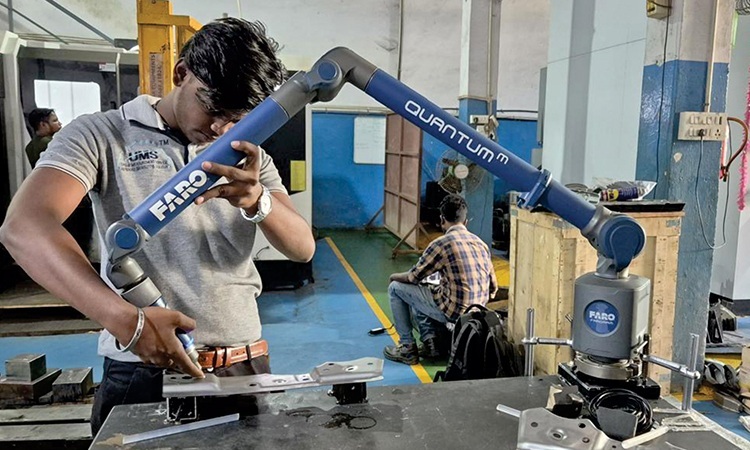
Furthermore, advancements in handheld devices have made high-accuracy measurement accessible in the field, empowering technicians and engineers to conduct inspections anywhere, anytime. Such innovations ensure that organizations don’t just meet but exceed industry standards by adopting proactive measurement strategies that safeguard quality at every stage of production.
Leveraging Data Analytics for Enhanced Accuracy
The synergy of metrology and data analytics is creating transformative opportunities in measurement practices. With the vast amounts of data generated from measurement devices, sophisticated analytical tools are employed to interpret the results, develop meaningful insights, and optimize processes. By leveraging data analytics, organizations can uncover patterns and trends that were previously hidden, allowing them to make informed decisions that enhance measurement accuracy and operational efficiency.
For example, using predictive analytics in conjunction with metrology helps businesses forecast potential measurement errors before they occur. By analyzing historical measurement data, machine learning algorithms can identify factors that correlate with significant deviations, enabling organizations to adjust processes proactively. Additionally, statistical analysis reveals insights that aid in understanding variations and inconsistencies in measurements, further reinforcing quality assurance protocols.
Innovative Software Solutions in Measurement Operations
The importance of software solutions in enhancing metrology practices cannot be overstated. Sophisticated software applications streamline measurement processes, automate data collection, and facilitate real-time analysis. For instance, computer-aided design (CAD) software integrates with measurement systems to ensure that manufactured parts adhere precisely to the intended specifications, minimizing the potential for costly errors.
Moreover, software solutions designed for metrology can incorporate advanced capabilities like virtual measurements and digital twin technology, allowing organizations to visualize and simulate products before they are manufactured. This enhanced visualization fosters collaboration across teams and ensures that all stakeholders are aligned toward optimal measurements. Additionally, cloud-based solutions are becoming increasingly prevalent, enabling remote access to measurement data, enhancing collaboration, and making real-time decision-making possible, regardless of location.
Case Studies: Metrology in Action Across Diverse Sectors
Automotive Industry: Driving Excellence Through Precision
The automotive industry exemplifies the critical importance of metrology in achieving excellence and safety. Modern vehicles consist of thousands of components, all of which must adhere to rigorous specifications to ensure safety and performance. Metrology enables manufacturers to achieve this precision through advanced techniques such as laser triangulation measurements, which assess the geometry of critical components like pistons and gears.
For instance, the use of 3D optical scanning in the automotive sector allows engineers to compare manufactured parts to their digital design counterparts, quickly identifying discrepancies that can lead to functional failures. As vehicles become increasingly sophisticated, with features like autonomous driving and advanced safety systems, the stakes surrounding measurement accuracy continue to rise. Automotive manufacturers rely on metrology not just to meet current standards but to push the boundaries of innovation, ensuring that future vehicles are as safe and efficient as possible.
Aerospace Advancements: Ensuring Safety with Metrology
Aerospace is another sector heavily reliant on metrology, where safety is non-negotiable. Aircraft components are subject to extreme stress and must undergo rigorous testing to ensure structural integrity and reliability. Precision measurement systems are employed to inspect components that undergo a variety of environmental factors, such as extreme temperatures and pressures.
For example, digital microscopes and coordinate measuring machines are routinely used to assess the surface finish and dimensional accuracy of turbine blades and other critical components. These advanced measurement techniques provide data that engineers need to identify potential weaknesses and assess whether components can meet stringent certifications before they are used in aircraft assembly. The ability to conduct accurate inspections not only ensures passenger safety but also plays a crucial role in maintaining the reputation and operational success of aerospace manufacturers.
Medical Devices: The Imperative of Accuracy in Healthcare
In the world of healthcare, metrology takes on a particularly vital role, as it directly impacts patient safety and treatment efficacy. Medical devices range from simple tools to complex machinery requiring exceptionally high levels of accuracy in their design and manufacturing. As innovations in medical technology emerge, metrology must adapt to ensure that these devices meet strict regulatory standards.
In this context, organizations employ sophisticated measurement systems to assess everything from implant dimensions to the functioning of intricate machinery used in surgeries. For example, precise measurement techniques ensure that prosthetic limbs fit patients perfectly, thereby not only enhancing comfort but also optimizing performance. Furthermore, regulatory bodies such as the FDA require stringent testing and validation of medical devices, making reliable metrology indispensable for compliance.
The Future of Metrology: Trends and Predictions
Embracing Industry 4.0: Digital Transformation in Measurement
The Fourth Industrial Revolution, commonly referred to as Industry 4.0, heralds a new era of advanced technologies and data analytics that are reshaping how industries operate, including metrology. The digital transformation of measurement systems involves incorporating IoT (Internet of Things), AI (Artificial Intelligence), and machine learning, yielding unprecedented levels of accuracy, efficiency, and connectivity.
This shift enables real-time data collection and analysis, allowing organizations to optimize their measurement processes dynamically. For instance, interconnected measurement devices can communicate data to a central system that analyzes and compares performance across various manufacturing stages, highlighting discrepancies immediately. This proactive approach leads to faster decision-making, increased operational efficiency, and reduced downtime, marking a significant evolution in how metrology is integrated into industry practices.
Sustainability in Metrology: Measuring a Greener Future
As environmental concerns continue to rise, sustainability has become a pressing issue across industries, including metrology. Organizations are increasingly looking for ways to measure their environmental impact and implement more sustainable practices. Metrology plays a critical role by providing accurate data to track emissions, resource usage, and waste generation across production processes.
For example, advanced measurement techniques can assess energy consumption in manufacturing processes, enabling businesses to identify inefficiencies and adopt greener solutions. Additionally, the development of eco-friendly measurement equipment designed to minimize environmental impact and enhance measurement accuracy represents a significant advancement in the field. By aligning metrology practices with sustainability goals, organizations not only contribute to environmental protection but also enhance their credibility and brand value in a market that increasingly prioritizes corporate social responsibility.
Preparing for Tomorrow: Skills and Technologies for Next-Gen Metrology
The rapid evolution of technology and evolving industry needs will necessitate a new generation of metrology professionals equipped with diverse skills. As automation and digital tools become ubiquitous, a strong foundation in data analytics, machine learning, and advanced measurement techniques will be essential. Furthermore, the collaboration between engineers, scientists, and data analysts will be vital to fostering innovative solutions in measurement practices.
Educational programs focusing on metrology must adapt to include interdisciplinary approaches and practical, hands-on training in emerging technologies. Organizations will also need to cultivate a culture of continuous learning, upskilling employees to keep pace with technological advancements. Investing in workforce development will not only improve measurement accuracy but also position organizations as leaders in future-driven industries, ensuring that they remain competitive and innovative in a dynamic marketplace.