
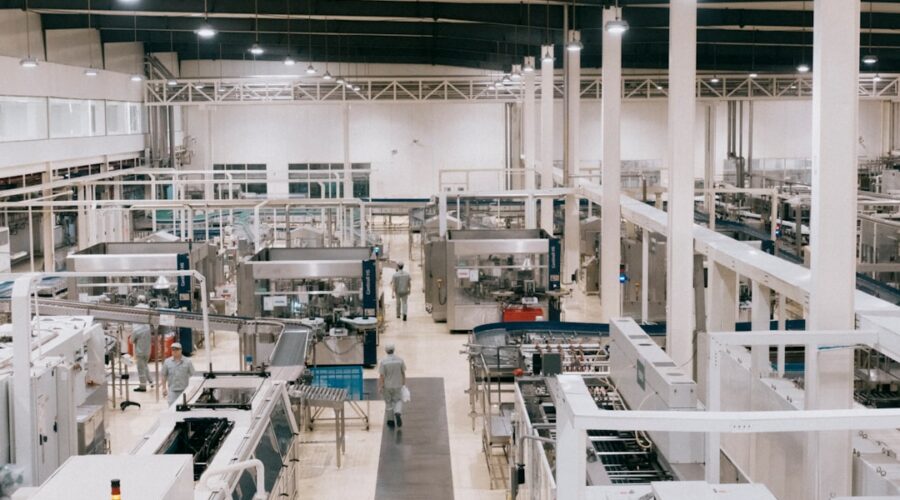
What defines innovation paths in advanced manufacturing environments today?
Innovation in modern manufacturing is no longer limited to new machinery or digital upgrades; it is a structured process that connects engineering insight, operational data, and production outcomes. Industry performance studies show that organizations with clear innovation pathways achieve up to 30 percent faster adaptation to new technologies. These structured approaches ensure that improvements are not random but strategically implemented. In this context, Audrey Saylor highlights that innovation must be guided by practical engineering understanding, where each improvement is measured, tested, and refined before full-scale deployment. This ensures stability while encouraging continuous advancement across manufacturing systems.
How do statistics support the value of structured innovation?
Manufacturing analytics consistently show that companies with defined innovation frameworks experience improved production efficiency and reduced system downtime. Efficiency gains typically range between 18 and 26 percent when innovation is supported by real-time data analysis and iterative testing. Additionally, defect rates decline as process improvements are systematically validated before integration. These measurable outcomes demonstrate that innovation is most effective when supported by disciplined engineering structures rather than isolated experimentation.
What role does regional engineering perspective play in shaping innovation strategies?
Practical exposure to manufacturing environments significantly influences how innovation is applied and scaled. Engineers working in real production settings develop a clearer understanding of constraints, resource limitations, and operational challenges. In this context, Audrey Saylor South Dakota reflects an applied engineering perspective where innovation is continuously refined through real-world validation. This grounded approach ensures that new ideas are not only creative but also functional and sustainable within industrial conditions. Statistical insights suggest that organizations incorporating field-based feedback into innovation cycles experience higher implementation success rates and fewer production disruptions.
How does innovation improve long-term manufacturing performance?
Innovation enhances manufacturing performance by introducing more efficient processes, improving material utilization, and reducing operational waste. When structured properly, innovation leads to stronger production consistency and improved lifecycle management of industrial systems. Predictive analytics and digital modeling further support innovation by identifying potential inefficiencies before they occur. This proactive approach allows manufacturers to optimize workflows and maintain steady output quality even as production demands evolve. Over time, innovation becomes a continuous cycle rather than a one-time improvement initiative.
What measurable benefits come from adopting advanced innovation pathways?
Advanced innovation pathways deliver measurable benefits such as increased throughput, reduced maintenance costs, and improved product accuracy. Statistical evaluations often show that organizations with mature innovation systems achieve higher first-pass yield rates and improved operational uptime. These benefits are reinforced by continuous monitoring and data-driven decision-making, which help identify improvement opportunities at early stages. As a result, manufacturing systems become more resilient, adaptive, and capable of handling complex production requirements with greater efficiency.
Why are innovation pathways essential for the future of manufacturing environments?
As manufacturing environments become more complex and technology-driven, structured innovation pathways are essential for maintaining competitiveness and operational stability. They ensure that technological advancements are integrated in a controlled and effective manner. Audrey Saylor emphasizes that the future of manufacturing depends on the ability to balance creativity with disciplined execution. Ultimately, well-defined innovation pathways enable organizations to evolve continuously while maintaining reliability, efficiency, and long-term industrial strength in an increasingly dynamic global market.