
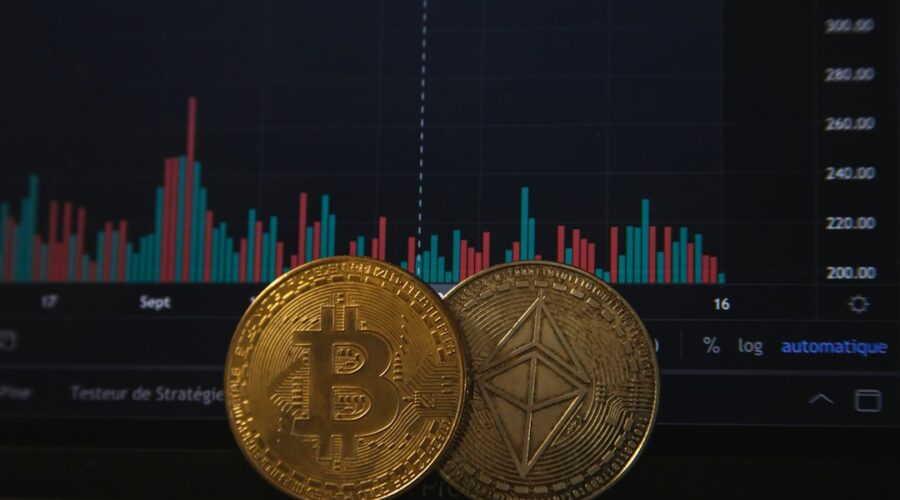
Digital assets have developed into an increasingly visible part of the modern financial landscape, supported by blockchain technology and expanding digital infrastructure. crypto markets operate differently from traditional financial markets, with price activity influenced by market participation, technological developments, liquidity, adoption, and broader economic sentiment. For traders, understanding the structure of digital-asset markets can provide a useful foundation for organized research and informed market observation.
In This Article
- The Expanding Digital Asset Landscape
- Blockchain as the Foundation
- Market Activity and Price Discovery
- The Importance of Market Data
- Technical Analysis for Digital Assets
- Technology and Trading Accessibility
- Understanding Market Cycles
- The Role of Diversification in Research
- Continuous Learning and Market Awareness
- Conclusion
The Expanding Digital Asset Landscape
The digital-asset ecosystem includes a wide variety of blockchain-based assets with different functions and characteristics. Some are designed primarily as digital stores of value, while others support applications, payment systems, decentralized services, or blockchain networks.
This diversity creates a market environment with multiple areas for research. Traders can study individual assets while also examining wider developments across the digital-asset ecosystem.
Blockchain as the Foundation
Blockchain technology provides the underlying infrastructure for many digital assets. Its distributed structure enables transactions and ownership records to be maintained across a network rather than relying exclusively on a single central database.
The technology has also encouraged innovation in areas such as decentralized applications, tokenized assets, digital payments, and automated blockchain-based services. These developments continue to contribute to the broader evolution of digital finance.
Market Activity and Price Discovery
Digital-asset markets are shaped by continuous interaction between buyers and sellers. Price discovery occurs as market participants respond to new information, changing expectations, technological developments, and shifts in demand.
Trading activity can vary significantly between individual assets. Monitoring volume, price behavior, liquidity conditions, and historical movements can therefore form an important part of digital-asset market research.
The Importance of Market Data
Reliable market information provides a foundation for systematic analysis. Traders can examine price charts, trading volume, historical performance, and changes across different timeframes to develop a clearer picture of market behavior.
A combination of current and historical data can be particularly useful because it allows traders to compare present conditions with previous market patterns while maintaining awareness of changing circumstances.
Technical Analysis for Digital Assets
Technical analysis is widely used to examine price behavior in digital-asset markets. Chart patterns, support and resistance levels, trend structures, momentum indicators, and moving averages are among the tools that can help organize market observations.
Different timeframes can reveal different aspects of price activity. Short-term charts may highlight immediate movements, while longer periods can provide greater context around broader market structures.
Technology and Trading Accessibility
Digital technology has made market monitoring increasingly accessible. Modern trading platforms can combine charts, market information, account functions, and trading tools in one environment.
This integration enables users to create personalized workspaces based on their preferred analytical methods. Traders can organize selected assets, monitor price movements, and adjust their research process according to changing market interests.
Understanding Market Cycles
Digital-asset markets can experience distinct periods of changing activity and attention. Traders who study historical market behavior can examine how participation, liquidity, and sentiment have evolved during different phases.
Recognizing broader market cycles does not require relying on a single indicator. Instead, traders can combine price history, market activity, technological developments, and relevant economic information to create a more complete research framework.
The Role of Diversification in Research
The digital-asset market contains numerous categories and individual projects. This variety allows traders to explore different assets and market themes when building a research watchlist.
Studying multiple assets can also provide a broader understanding of how different segments respond to market developments. A focused research process helps traders compare characteristics without making the analysis unnecessarily complicated.
Continuous Learning and Market Awareness
Digital finance continues to evolve through technological innovation and changing participation. Traders can strengthen their market knowledge by following blockchain developments, studying market data, learning analytical techniques, and reviewing historical price behavior.
Continuous education can help users keep their research methods relevant as the digital-asset environment develops.
Conclusion
Crypto markets represent an innovative segment of digital finance, combining blockchain technology with an active global trading environment. Their diverse asset categories, evolving technology, market data, and analytical opportunities create substantial scope for structured research. By studying price behavior, market activity, blockchain developments, and broader digital-finance trends, traders can build a well-organized framework for understanding this rapidly developing market.
Bottom of Form
—-++Bottom of Form
+++++
The Short Version
- Digital assets are a significant part of the financial landscape, driven by blockchain technology and improved digital infrastructure.
- The diversity of digital assets includes those serving as stores of value and others that facilitate applications and payment systems.
- Price discovery in digital-asset markets is influenced by interactions between buyers and sellers and changes in technological and market conditions.
- Reliable market data, including price charts and trading volume, is crucial for traders to analyze market behavior effectively.
- Technical analysis tools, such as chart patterns and momentum indicators, can help traders understand price behavior in various timeframes.
- Studying a range of assets allows traders to better comprehend different market segments and their responses to developments.